Share of Model
We’re living through the biggest disruption to the biggest marketing channel of all time. Search is now a brand marketing channel, not a performance channel. The question that matters now isn’t share of search—it’s share of model: when someone asks an AI about your category, how often does it recommend you, and what does it say about you?
87% of marketing chiefs already have a board asking for an AI search strategy, and GEO is the discipline forming around the answer. But citation share is too noisy to anchor a strategy. This is brand work now, mediated by models you don’t control: it rewards principles that don’t change every six weeks, and experiments that do.
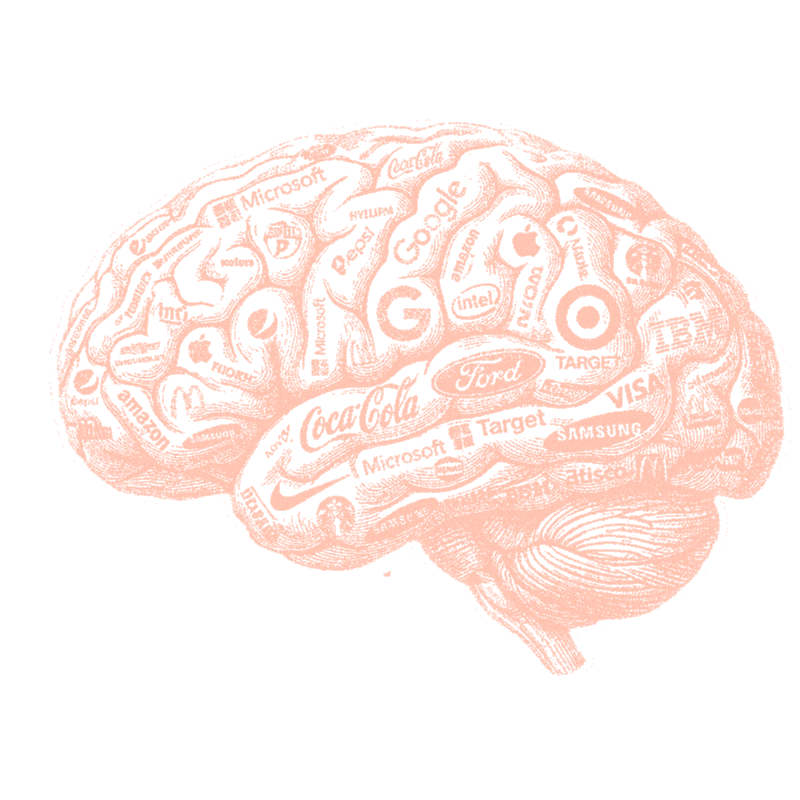
Mental availability and brand preference now live in the models.
Weekly ChatGPT users—more than doubled in twelve months.
Monthly users of Google AI Overviews. AI Mode passed a billion monthly users in its first year.
Share of all web traffic that is now bots, not humans—driven by agentic AI doing the browsing for us.
This Already Happened
AI search is already here—it’s just not evenly distributed. ChatGPT’s prompt volume is already roughly 18% of Google’s daily searches, and AI Mode queries are doubling every quarter. McKinsey found 44% of AI-search users now treat it as their primary source of insight—ahead of traditional search at 31%. For B2B it’s starker: 51% of software buyers start purchase research in a chatbot, not a search engine.
AI search is fragmented across different models
No single surface dominates anymore—one monopoly became an oligopoly. Sources: Google, OpenAI (2025–26).
The fragmentation is the strategic point, not just the growth. Ultimately, this is a half-dozen new channels that don’t all agree with each other. Only 6–8% of URLs ChatGPT cites also rank in Google’s top ten. After decades of search being winner-take-all, this feels chaotic.
Preference Over Position

SEO was a game of position: There was a list, you had a slot on it, and the slot was objective—everyone searching the same words saw the same ten links. AI answers don’t work like that. What replaces the search rankings page is a set of preferences, and increasingly memories, the model has about the user that helps inform the unique ways it chooses to represent your brand and products to users. This is even true for what we would think of in search as branded terms.
The old world · rankings
initech.com
Initech—Project Management Software for Modern Teams
Trusted by 40,000 teams. Plans from $9 per user. Start your free trial today.
The new world · preference
What’s the best project management software?
For most teams I’d shortlist TeamFlow or Orbit—both score well for onboarding, support, and transparent pricing.
I’d be cautious with Initech: it ranks well in search, but users on Reddit consistently report surprise price increases and contracts that are hard to cancel.
Same brand, same day. Rankings were objective, deterministic, and measured in clicks; preference is qualitative, probabilistic, and shaped by places you don’t control. (Illustrative mockup.)
We watched a brand that ranks #1 on Google for its main commercial terms show up in AI answers with a warning attached—effectively, “don’t buy from these people.” The complaints came from Reddit threads about pricing, baked into training data. Peer-reviewed audits confirm this is systematic: models carry trained-in brand preferences before any web search happens.
And look at who actually shapes the preference. It’s estimated that in 2026, Wikipedia is 13.2% of ChatGPT citations and Reddit is 12%; the Wall Street Journal and the New York Times don’t crack the top twenty. 63% of all AI citations point to listicles—comparison content is the new shelf space. And while all that’s true today, there’s no guarantee it will still be true tomorrow.
Two Memories
To influence the preference you have to know where it lives. Models have two memories: the weights—what they absorbed in training, updated every few months at best—and retrieval, what they look up in the moment.
A lot of AI search is just a bunch of Google searches in a trench coat.
The useful frame here is pace layers, a Stewart Brand idea that Alephic has written about applying to AI work: complex systems have fast layers that absorb shocks and slow layers that hold the structure. AI search is exactly this. Mentions and citations move daily. Your owned website moves weekly. Core search rankings—which still power most AI retrieval—move over months. And the training run that decides what the model believes about you moves over quarters and years.
Each layer moves at a different speed and rewards different work. Adapted from the pace layers concept.
Most GEO tactics on sale today only touch the fastest layer. Self-serving listicles work right now because retrieval weights them heavily—which is why it’s a short-term game with a short-term prize. The arbitrage gets crushed the moment engines pre-compute answers and filter self-interested sources, the way Google has spent twenty years learning to do. Worse, flooding the fast layer with AI slop poisons the slow one: it damages how you’re represented in the next training run, and recovery operates on training-run time, not sprint time.
The fast layers are for experiments; the slow layers are for strategy. A plan rooted in principles and fundamentals—real reputation, real evidence, real infrastructure—keeps paying as it sinks down the layers. A plan built on chasing listicles because they work today expires with the next model update.
Provocation 01
The New Information Economy

For thirty years the web ran on a simple trade: you let crawlers read your content, and search engines sent you visitors. Google still crawls about five pages per visitor it refers back. OpenAI crawls 857. Anthropic, more than eleven thousand. The traffic isn’t coming back—AI clickthrough fell from 0.8% to 0.27% in 2025, and publishers expect another 43% drop by 2029.
Pages crawled per visitor referred back · log scale
Source: Cloudflare Radar, 2025–26.
The web’s response has been to wall itself off.
Top news sites blocking AI training bots
79%
block at least one AI training bot
Each square is one of the top 100 news sites. Across the wider web, 5.6M sites now block GPTBot via robots.txt—up 70% in ten months. Sources: BuzzStream, The Register (2025–26).
And the walls now have infrastructure. Cloudflare, in front of roughly a fifth of the web, now asks every new domain at signup whether to allow or deny AI crawlers, and HTTP 402 “Payment Required” became live pay-per-crawl plumbing. Where traffic stopped flowing, payments started: 91 content licensing deals and counting—News Corp–OpenAI near $250M, Reddit–Google at $60M a year—plus Anthropic’s $1.5B authors settlement putting a price on unlicensed training data. A real market for machine-readable information is forming, with prices.
Underneath the plumbing, this is a disintermediation story—the one that gutted publishers, now running for everyone else. The assistant sits between you and your customer, keeps the relationship, and hands back a transaction at best: the sale without the loyalty or the insight. You don’t have to call yourself a publisher for this to reach you. If your economics depend on owning an audience, it already has.
Which makes every brand a publisher with a data posture, whether it wants one or not. Block, license, or feed—but choose deliberately. Your robots.txt is a commercial term now, not an IT setting. And blocking doesn’t even keep you out of AI answers; it just removes your voice from how you’re described.
Provocation 02
Agentic Commerce
Agentic commerce is already here. AI influenced $262B of global online holiday sales—a fifth of the total. Shopify orders from AI searches grew 13× in Q1. And AI-referred traffic now converts 42% better than everything else—a full reversal from 2025, because the model already did the comparison shopping.
The rails underneath are still trying to catch up—two rival protocols fought over in standards bodies and in court, the map redrawn three times in eighteen months. Watch Walmart’s path through it:
The protocol wars · 18 months

OpenAI launches Instant Checkout
The Agentic Commerce Protocol (ACP), built with Stripe. The buy button moves inside ChatGPT.
Walmart signs on
The world’s biggest retailer agrees to sell inside the chat.
Google and Shopify answer with UCP
The Universal Commerce Protocol, announced at NRF with 20+ retailers. The retailer stays merchant of record and keeps the data. Amazon, Meta, Microsoft—even Stripe—join the council.
OpenAI walks checkout back
Discovery stays in ChatGPT; checkout goes home to the merchants. Target, Sephora, Best Buy, and Home Depot stay aboard.
Walmart pulls out—and returns on its own terms
Native yield ran 3× worse than its own properties, so Walmart left Instant Checkout—and embedded its own agent, Sparky, inside ChatGPT instead. Rent the audience. Keep the relationship.
Two protocols, one full reversal, eighteen months. Anyone selling you a definitive agentic-commerce playbook is guessing.
Amazon, meanwhile, blocked ~47 AI agents and sued Perplexity rather than integrate—while its own assistant drove roughly $12B in incremental sales inside its walls. Nobody knows where this lands yet—not OpenAI, not Google, not Walmart. It is early. The wrong move is waiting for a winner; the right one is staying light—options open on every protocol, the customer relationship held where you can defend it.
The query is becoming a brief
65–85% of ChatGPT prompts match nothing in a traditional keyword database. The buyer hands over the whole brief—constraints, context, budget—and the comparison happens inside the answer. Source: Semrush clickstream studies, 2025–26.
AI drives an explosion in customer preferences—through personalization and longer prompts. The funnel changes shape: the middle—comparing, shortlisting, checking reviews—disappears into the model, and what comes out is a decision. And in agentic commerce, agents don’t run keyword searches; they match catalogs against preferences no one would type into a search box—budgets, brand vetoes, ethical lines, fit. Discovery becomes personalization. Being readable gets you considered; being described richly enough to match a real preference gets you bought.
Provocation 03
From Rank Tracking to Brand Tracking
SEO was about clicks and performance. AI search is about opinion. The model has a view of your brand, and every interaction puts it into words—describing you, in its own words, to every buyer who asks. The question stopped being do you rank and became what are you like.
It’s also a conversation you never see. The buyer asks, the model answers, a view of your brand forms—and nothing reaches you. No click, no visit, no line in the logs. Search was the one place a brand impression came with a number attached. Now the impression happens and the number never does.
AI search is a lot more like brand marketing than SEO ever was.
It changes the day job too. SEO came with a free map of demand: every keyword your buyers typed, with volumes attached. GEO deletes the map. Prompts are 23-word briefs, never typed twice, invisible to you. There is no Ahrefs for prompts. When you can’t study the queries, you have to study the customer.
This is the oldest job in marketing: awareness, preference, reputation. How Brands Grow calls it mental availability—not whether buyers know your name, but whether you come to mind in a buying situation. A prompt is a buying situation, typed out in full.
The channel
Old ·Dumb. Ranked you or it didn’t.
New ·Talks. Describes you in its own words, to every buyer who asks.
The demand
Old ·Keywords, with volumes attached.
New ·Need states—the situations that send buyers asking.
The scoreboard
Old ·Rankings and clicks.
New ·Your position in the answer, persona by persona.
The brand tracker
Old ·Surveys and brand-lift studies, twice a year.
New ·Share of model: ask what it believes, trace what feeds it.
Same job, new instruments. The brand tracker still works—it’s just pointed at a model now.
It’s already costing deals: 69% of B2B buyers chose a different vendor than they planned based on AI guidance, and a third bought from one they’d never heard of. The shortlist is settled in a conversation you can’t see, before your pipeline knows the deal exists. And most enterprise brands are in the worst spot: perfectly crawlable, never shortlisted.
So you navigate by the two things brand marketers have always owned: what your customers actually need, and what you actually stand for. Not keyword lists—need states, the situations that send someone asking. Not rankings—your attributes, and whether the model repeats them back.
You Bought Profound. Now What?

Citation monitoring is table stakes, but it doesn’t tell you much on its own—ask a model the same prompt twice and the brand list barely repeats. We believe serious brands should be investing in strategy from first principles, backed by first-party research and data. And innovating and experimenting in playgrounds and prototypes.
That’s the work Alephic is built for: strategy, search, and AI in one team—the combination AI search actually demands.
Know your customers, know the models, and connect the two.
In practice, that’s custom explorations and working systems:
AI content explorations
AI-generated content workflows with editorial control and evals built in—tested against the models, not just shipped to them.
Model studies
How frontier models actually describe your brand across categories and personas, built on your data—not a generic visibility score.
Market intelligence builds
Systems that read your market at scale—scoring content and tracking what the models believe about you and your category.
Trusted by teams at








Strategy in times of uncertainty requires adaptation. We embed with your team, ship the first working system in weeks, and leave you with infrastructure that compounds—the forward-deployed way we work on everything.
Work with us
Find out what the models already believe about your brand.
Alephic maps model preference, traces what feeds it, and ships the infrastructure to change it.
Related Reading
Brand Brain
The ontology marketers need for AI—including owned content structured for answer engines. GEO is one slice of a brand brain, not the other way around.
Pillar PageContext Engineering
The same discipline pointed inward: what a system knows determines how it behaves. GEO is context engineering for models you don’t control.
GlossaryGenerative Engine Optimization
The short definition, for anyone who arrived here mid-conversation.
EssayIt Isn’t Misinformation, It Is a Miss of Marketing
James on why public trust is a marketing problem, not an information problem. Models inherit the reputation you actually earned.
Pillar PageNo SaaS
Why renting a dashboard is not a strategy, on this problem or any other.
Pillar PageForward-Deployed Engineering
How we work on this: embedded engineers shipping systems in weeks, not a binder of recommendations.
The rules are still being written
The work AI search unlocks isn’t optimization. It’s strategy—and the brands that treat it that way get to write some of the rules.
Further Reading
On AI Search ↗
Tom Critchlow’s long-form interview on the BrXnd Dispatch—the trench coat line, the SOAR framework, and why this is brand marketing now.
EssayWhy AI Search Matters ↗
Why AI search is a multi-disciplinary problem and where the new skills gap is opening—from Tom’s SEO MBA newsletter.
EssayPace Layering: How Complex Systems Learn and Keep Learning ↗
Stewart Brand’s original essay on pace layering—the frame we borrow for fast retrieval versus slow training.
BookHow Brands Grow ↗
Byron Sharp’s evidence-based laws of brand growth. Mental and physical availability—the two pillars share of model now runs on.
ResearchThe crawl before the fall of referrals ↗
Cloudflare’s data on crawl-to-referral ratios—the clearest picture of the broken bargain.
ResearchGoogle users are less likely to click when an AI summary appears ↗
Pew Research on 68,000 real searches: users click a result on 8% of searches with an AI Overview versus 15% without.
PaperGEO: Generative Engine Optimization (KDD 2024) ↗
The paper that named the category: Aggarwal et al. on which content strategies actually move generative engine visibility.
When someone asks a model about your category, what does it say?
A four-week foundational sprint: how models actually describe your brand and why, a deliberate data posture, and the first agent-ready infrastructure shipped. Built into your stack, owned by you—code, not a deck.