Build vs Buy AI
The question isn't whether you can afford to build — it's whether you can afford to let anyone else own the learning your data unlocks.

BetterCloud says the average company still runs 106 SaaS apps in 2026.
From concept to working custom AI system with a strong coding harness.
BenchSights put median public SaaS ARR growth at 15% in Q2 2025.
The Calculus Changed
Salesforce spent years teaching the market to chant “no software.” The campaign worked. Their No Software logo became shorthand for a generation-defining promise: stop installing things, start subscribing. The pitch was real. Custom software used to mean big budgets, long timelines, and a tolerance for large, slow IT departments. SaaS replaced installation hassles with a browser tab and a credit card.
Then enterprises conformed to SaaS products rather than the reverse. Approval chains, permissions, workflows, and definitions of success arrived preloaded. What started as liberation turned into standardization.
For two decades, “license SaaS” was the default because it was fast, OpEx-friendly, and sufficient. The AI boom has completely transformed this calculus: LLMs accelerate development from quarters to sprints. What once required a twelve-person engineering team and a six-month roadmap can now ship in days with the right harness.
Once a vendor's schema becomes the canonical record, its data gravity pulls every upstream and downstream team into orbit. People start speaking the platform's language. Soon the software is not reflecting the organization. The organization is reflecting the software.
Klarna made this concrete. They shut down roughly 1,200 SaaS applications including Salesforce. The driver wasn't cost savings — it was, in their words, unification and standardization of their knowledge and data. They decided that the organizational cost of running somebody else's schema was higher than the cost of building their own systems. That calculation only becomes easier as the tools get better.
We wrote about this shift in depth. Read the No SaaS page.
Build, Buy, or Rent

Most articles frame the decision as binary: build or buy. That framing obscures a third option that most enterprises are actually using: rent. The word “build” comes from Old English byldan — to construct a dwelling — from the Proto-Indo-European root *bheue-, meaning to be, to exist, to grow. To build is to create the conditions for being. That etymology matters because it clarifies what's at stake.
Build: Custom AI systems with your private tokens. CapEx, capitalizable, an appreciating asset. The software learns your language, compounds with use, and belongs to you.
Buy (SaaS): Off-the-shelf software. OpEx, hits EBITDA 100%. Someone else's mirror. Fast to deploy, but the roadmap, the schema, and the data model are theirs.
Rent (Consulting/Agency): Temporary capability, no compounding. Consultants produce strategy decks; agencies produce campaigns. Neither ships code that gets smarter after they leave.
We state our bias upfront: we are former SaaS entrepreneurs who have shifted focus to services. We built and sold SaaS companies. We know the model from the inside. And we believe the calculus has changed.
Keep the boring utilities. But the moment software starts touching your judgment, your workflow, your brand voice, or your edge — you are not buying a tool. You are deciding whether what makes your company yours lives inside the business or inside someone else's schema.
The future of business strategy isn't just about making better decisions - it's about building better decision-making machines.
Source: Strategic Software
Private Token Sovereignty
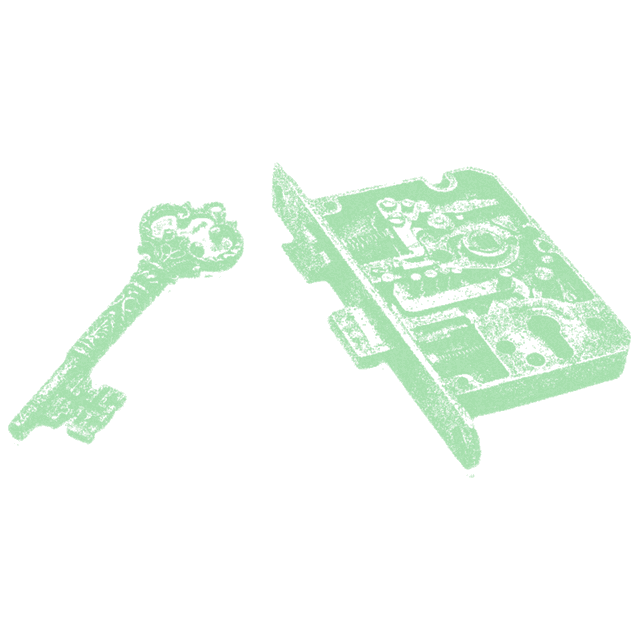
Your company's private tokens are its digital DNA — briefs, call notes, strategy docs, naming conventions, weird approval shortcuts, and the list of things a good operator notices before anybody else notices them. Public models can get you the median result on almost anything. Private-token systems understand your language, your customers, your challenges, and your standards.
We call the new objective private-token sovereignty: keep your proprietary data inside the firewall, enrich and amplify it with best-in-class public models. The system gets smarter with every interaction. Every conversation and internal discussion enhances the software's capabilities.
Building on these LLMs with your private tokens is essential: your software strengthens with each model upgrade instead of merely accruing technical debt. A SaaS vendor's upgrade cycle is their business decision. Your custom system's improvement cycle is yours.
Model portability matters here. A modular in-house stack lets you hot-swap OpenAI GPT-4o to Anthropic Claude to Google Gemini as they emerge with minimal re-engineering. You are not locked to any single provider. The intelligence lives in your context layer, not in any one model's API.
The Decision Matrix
This table is not a rhetorical device. It is a genuine decision-making tool. The rows correspond to the questions we hear most often from enterprise leaders trying to figure out which path to take.
Workflow shape
Build
Built around your actual workflow
Buy (SaaS)
Defined by the vendor
Rent (Agency)
Mapped in slides
Learns your private tokens
Build
Yes — compounds over time
Buy (SaaS)
Only where configuration allows
Rent (Agency)
Only as recommendations
Time to working software
Build
Days to weeks
Buy (SaaS)
Already built for everyone else
Rent (Agency)
Never ships code
Ownership
Build
You own the capability
Buy (SaaS)
The roadmap stays outside
Rent (Agency)
Stops at the recommendation
How it gets better
Build
Grows smarter with every interaction
Buy (SaaS)
Improves on the vendor schedule
Rent (Agency)
Resets with each engagement
Financial treatment
Build
CapEx, capitalizable
Buy (SaaS)
OpEx, hits EBITDA 100%
Rent (Agency)
OpEx, one-time
The Stakeholder View
Different seats at the table see different risks. That's fine. The point is that each one arrives at the same conclusion through its own logic.
CMO
License now for speed. Build later for brand-specific magic. The SaaS tool gets you through Q1, but the custom system is what lets your brand sound like itself at scale.
CTO
Build modular components that survive model generations. The intelligence lives in your context layer and your data pipelines, not in any one vendor's API. Design for portability from day one.
CFO
Start with low-risk pilots, then invest in built assets that appreciate as models improve. CapEx treatment means the investment shows up on the balance sheet, not as a recurring drag on EBITDA.
Legal / Compliance
Build keeps sensitive data inside the firewall. No third party trains on your proprietary information. No data residency questions. No vendor security reviews that take longer than building the system yourself.
The Alephic approach follows a deliberate progression: Alpha (prototype a working system in days), Beta (run it in parallel with existing tools), Production (full integration and ownership transfer). Each phase de-risks the next.
We go deeper on this progression in Enterprise AI Strategy.
When to Build, When to Buy
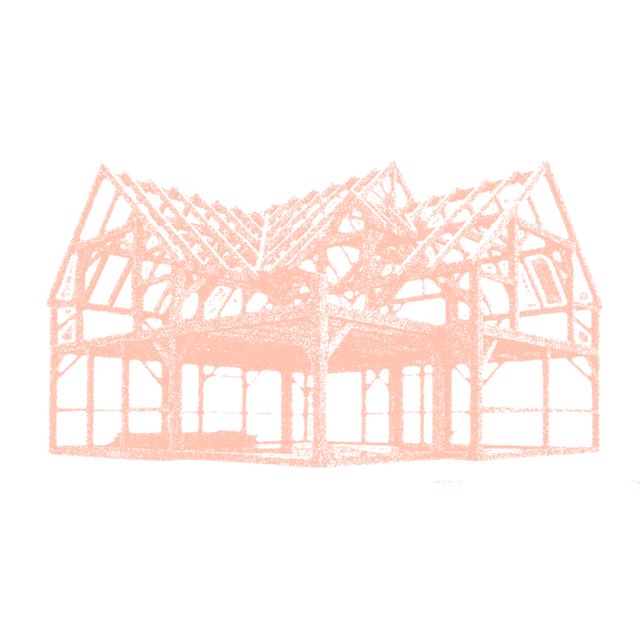
The test is simple: if the software shapes your differentiation, do not rent it.
Build when:
- The workflow touches judgment, brand voice, or competitive edge
- Proprietary data is the primary fuel
- The system needs to learn and compound over time
- Compliance or data residency demands full control
Buy when:
- Commodity function with no competitive differentiation
- Speed matters more than specificity
- The vendor's schema doesn't touch your core workflow
Rent when:
- You need capability now but don't have internal builders yet
- The engagement transfers ownership, not just recommendations
That last point is Alephic's model. We build, you own. Our forward-deployed engineers embed with your team, ship working systems in days, and transfer full ownership when the engagement ends. No lock-in, no recurring dependency, no renting your competitive edge.
Related Reading
No SaaS
SaaS standardized how companies work. AI makes it possible to build software that reflects your shape, your ambition, and your edge.
Enterprise AI Strategy
The strategic framework for building AI capabilities that compound across your organization.
Forward-Deployed Engineering
How embedding senior engineers directly inside your team collapses the gap between strategy and working software.
“The question is not whether we can afford to build, but whether we can afford to let anyone else own the learning that data unlocks.”
— Noah Brier, Co-founder of Alephic
Further Reading
Build/License Framework for AI ↑
The original framework for deciding what to build internally versus license externally in the age of AI.
NewsletterThe Holy Trinity of AI ↑
Context, models, and tooling — the three layers that define every enterprise AI system.
InterviewThe AI Agency Landscape ↑
David Berkowitz on the shifting landscape of AI services and where agencies fit in the new stack.
EssayConway’s Law ↑
Mel Conway’s original framing of why systems inherit the structure of the organizations that build them.
Ready to build what\u2019s yours?
We help enterprises build AI systems they own \u2014 no lock-in, no dependencies, no renting your competitive edge.